
Product Details
Product Information
|
2-amino-2-(hydroxymethyl)propane-1,3-diol; 4-[[(3S,8S,9S,10R,13R,14S,17R)-10,13-dimethyl-17-[(2R)-6-methylheptan-2-yl]-2,3,4,7,8,9,11,12,14,15,16,17-dodecahydro-1H-cyclopenta [a] phenanthren-3-yl] oxy]-4-oxobutanoic acid |
|
|
Physical State |
White Solid |
|
CAS NO. |
102601-49-0 |
|
Molecular Formula |
C35H61NO7 |
|
Molecular Weight |
607.86 |
|
Purity |
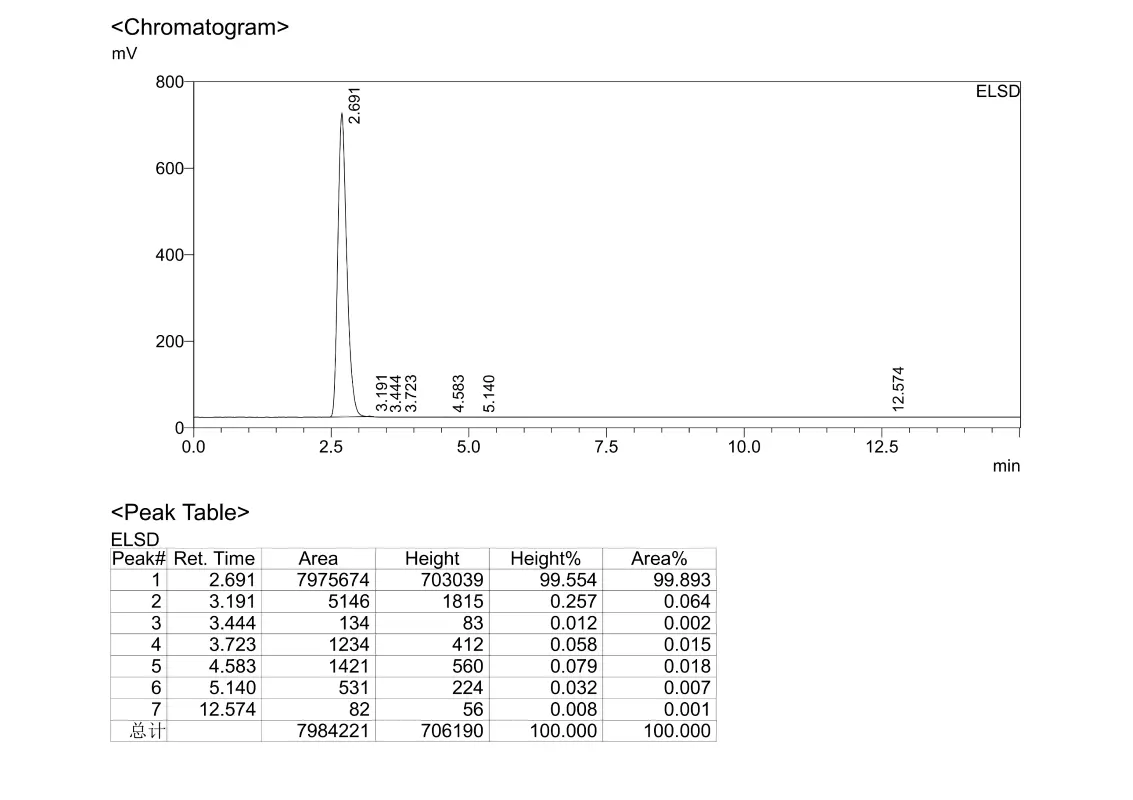
≥ 99.0% |
Product Description
CHS (Cholesteryl Hemisuccinate Tris Salt) is a steroid anionic surfactant additive. The molecule has a rigid cholesterol tetracyclic core as the hydrophobic backbone and is connected by succinic acid to the negatively charged polar head group. Tris acts as the counterion to achieve water solubility, mimicking the molecular conformation of natural cholesterol. The critical micelle concentration of CHS is extremely low, and it is not suitable for use alone for membrane protein dissolution. It is usually combined with main surfactants such as LMNG (Distolife catalog number: LMN01, LMN02, LMN03) for use and is embedded inside the surfactant micelles to reconstruct the original membrane microenvironment. It can significantly enhance the thermal stability of eukaryotic membrane proteins such as G Protein-Coupled Receptors (GPCRs), inhibit protein conformational unfolding and aggregation, and retain the physiological activity of the protein.
Key Advantages
- High Purity, Accurate Structure, Low Impurities: Manufactured through refined synthesis and purification processes to ensure an accurate chemical structure, strict control of related impurities, and superior overall product performance and stability.
- Kilogram-Scale Production: Backed by mature scale-up capabilities for kilogram-scale manufacturing, capable of meeting large-volume supply demands for both research and pilot-scale stages.
- Eco-Friendly Process: Utilizes environmentally friendly synthetic routes to strictly minimize the use of hazardous reagents and the generation of related byproducts (such as heavy metal salts), keeping the environmental footprint low.
Applications
- Extraction and purification of membrane proteins
- Protein crystallization
- Structural biology research, including cryo-EM sample preparation
- Membrane-mimicking additive for GPCR studies
Transportation and Storage
- Store at low temperature, keep away from moisture
- Powder: -20 °C for 3 years
- In solvent: -80 °C for 1 year
- Ship at ambient temperature.
Notice
1. To ensure the safety and health of operators, laboratory coats and disposable gloves must be worn throughout the entire experimental procedure.
2. Certain technical information provided with this product is intended for customer reference, academic communication, and scientific research purposes only. Our company does not warrant the absolute authority or completeness of the information provided.
3. This product is for research use only. It is strictly prohibited for use in clinical diagnosis, treatment, food, pharmaceuticals, or any other applications involving human use. Do not store this product in ordinary residential premises.
Technical Data
Data
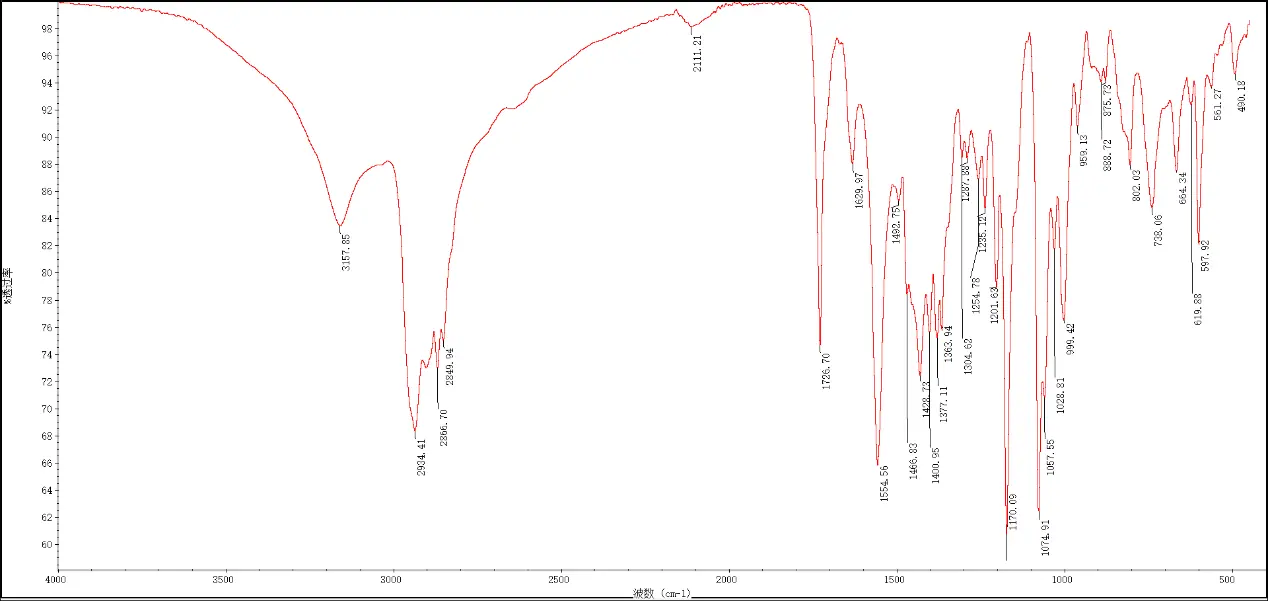
IR
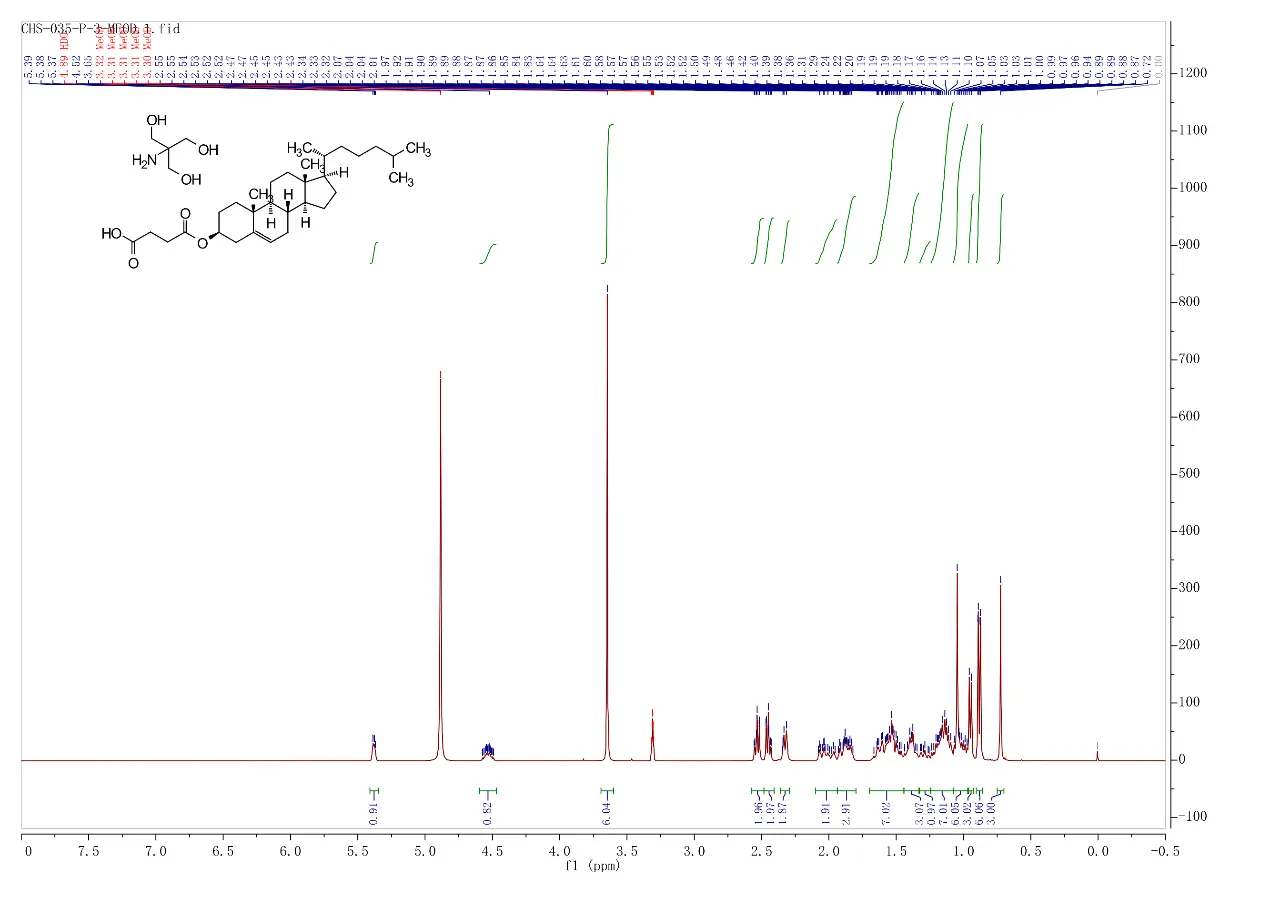
HNMR
HPLC
Electron Microscope (EM)
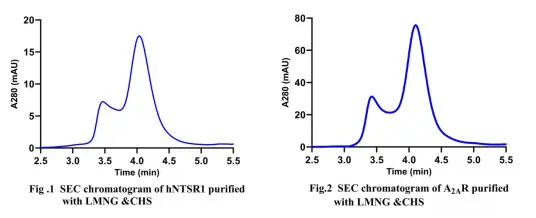
Distolife self-developed LMNG & CHS for GPCR human neurotensin receptor 1 (hNTSR1) and adenosine A2A receptor (A2AR) extraction and purification.
SEC-HPLC Chromatogram Analysis
The figures below show SEC-HPLC chromatograms of hNTSR1 and A2AR purified with Distolife self-developed LMNG-CHS detergent. The SEC-HPLC chromatograms reveal minor aggregated species for both hNTSR1 and A2AR GPCR proteins purified using Distolife LMNG & CHS. The sharp and symmetric main peaks indicate favorable monodispersity of the target proteins.
SDS-PAGE
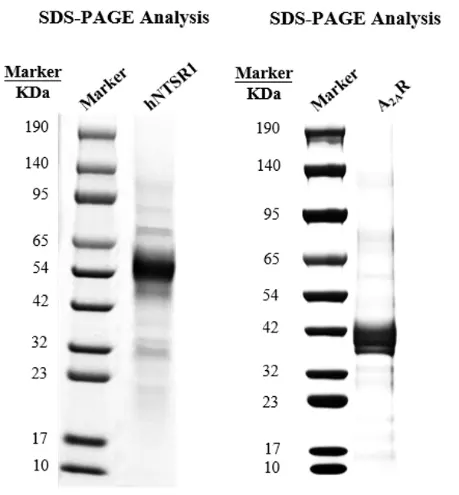
Both samples exhibited discrete, distinct target protein bands on SDS-PAGE electrophoresis, with molecular weights matching the theoretical values of the GPCR receptors, which corroborates the SEC-HPLC results.
The self-developed LMNG combined with CHS from Distolife is well-suited for the complete purification workflow of GPCR membrane proteins, including membrane solubilization, affinity purification, and size-exclusion chromatography. It exhibits excellent purification performance and serves as a cost-effective experimental option for membrane protein research.