
Product Details
Product Specifications
| Chemical Name | 2,2-didecylpropane-1,3-diylbis[4-O-α-D-glucopyranosyl-β-D-glucopyranoside] | ||
|---|---|---|---|
| Physical state | White Solid | ||
| CAS NO. | 1257852-96-2 | ||
| Molecular Formula | C47H88O22 | ||
| Molecular Weight | 1005.19 | ||
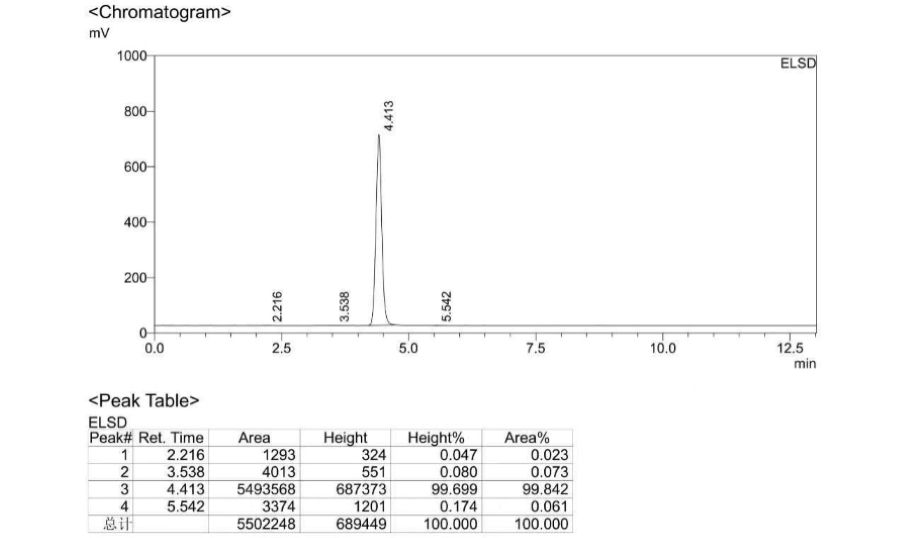
| Purity | ≥ 98.0% | ||
| CMC | (H2O) ~ 0.01mM(1) (0.001%) | ||
| pH | 5-8 (1% solution in water) | ||
| Conductance | < 100 μS (5% solution in water) | ||
| Solubility | ≥5% (in water at 20°C) | ||
Product Description
LMNG (lauryl maltose neopentyl glycol) is a new‑generation MNG‑class amphiphilic detergent designed for high‑performance membrane‑protein research. Compared with conventional detergents, LMNG features a unique neopentyl‑glycol core scaffold (double‑head, double‑tail structure), delivering mild yet efficient solubilization capacity. It preserves the native conformation and functional activity of membrane proteins to the greatest extent during extraction.
LMNG can be used in combination with other detergents. It is applicable for extraction and purification of unstable membrane proteins such as GPCRs and ion channels, sample preparation for structural biology including cryo‑EM and protein crystallization, as well as studies on drug‑target stability and biomolecular interaction analysis.
Key Highlights
- High Purity: Subject to strict purification process control to keep impurity content low, minimizing interference from endogenous impurities on membrane protein activity, conformation, and downstream functional assays.
- Validated across Multiple Membrane Protein Projects: Supported by internal project validation data; well-suited for the solubilization and purification of hard-to-express membrane proteins such as GPCRs and ion channels, with overall performance benchmarked against classic peer products.
- Mild Solubilization Ability: As a non-denaturing zwitterionic detergent, it offers mild solubilization conditions, enabling effective membrane component solubilization while maximizing the retention of natural membrane protein conformation and biological activity.
Applications
- Extraction and purification of unstable membrane proteins including GPCRs and ion channels
- Sample preparation for structural biology, such as cryo‑EM and protein crystallization
- Drug‑target stability studies
- Biomolecular interaction analysis
Transportation and Storage
- Shipping at ambient temperature.
- Powder: -20°C for 3 years
- In solvent: -80°C for 1 year
Notice
1. To ensure the safety and health of operators, laboratory coats and disposable gloves must be worn throughout the entire experimental procedure.
2. Certain technical information provided with this product is intended for customer reference, academic communication, and scientific research purposes only. Our company does not warrant the absolute authority or completeness of the information provided.
3. This product is for research use only. It is strictly prohibited for use in clinical diagnosis, treatment, food, pharmaceuticals, or any other applications involving human use. Do not store this product in ordinary residential premises.
Technical Data
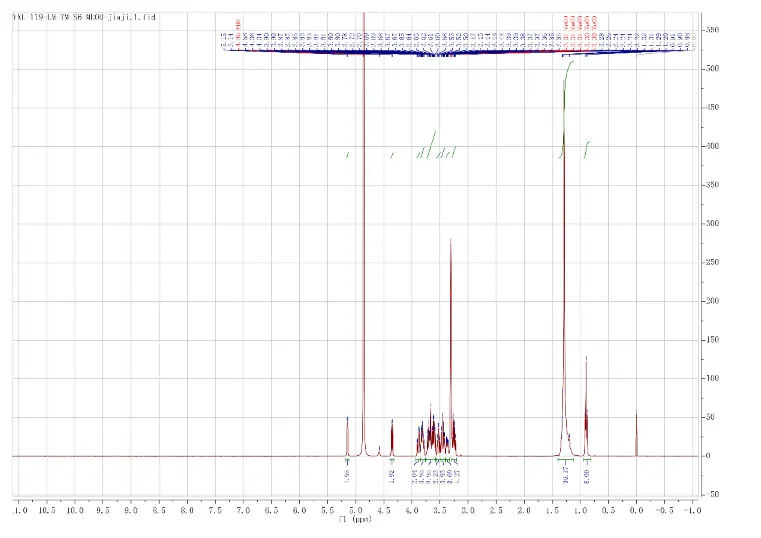
HNMR
HPLC
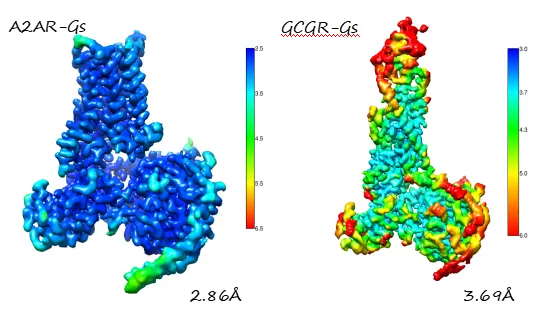
Cryo-EM 3D Structure
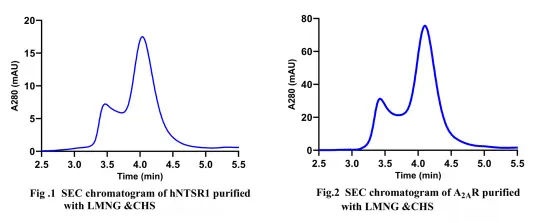
SEC‑HPLC Chromatogram Analysis
The figures below show SEC‑HPLC chromatograms of hNTSR1 and A₂ₐR purified with Distolife self-developed LMNG‑CHS detergent. The SEC‑HPLC chromatograms reveal minor aggregated species for both hNTSR1 and A₂ₐR GPCR proteins purified using Distolife LMNG & CHS. The sharp and symmetric main peaks indicate favorable monodispersity of the target proteins.
SDS-PAGE
Both samples exhibited discrete, distinct target protein bands on SDS-PAGE electrophoresis, respectively, with molecular weights matching the theoretical values of the GPCR receptors, which corroborates the SEC‑HPLC results.
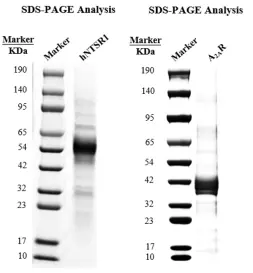
The self-developed LMNG combined with CHS from Distolife is well‑suited for the complete purification workflow of GPCR membrane proteins, including membrane solubilization, affinity purification and size‑exclusion chromatography. It exhibits excellent purification performance and serves as a cost‑effective experimental option for membrane protein research.